
The Importance of Primary Education in Framing a Child's Development
Do you remember your early years of school? You may not remember all the math problems, but you probably remember what it felt like to finally “get” a tough idea or what it was like to have your teacher cheer you on when you tripped on the playground. These things are more than just memories; they are the foundation of who you are today.
Defining the Start: What is Primary Education?
When we discuss primary education, we are talking about the years between the ages of five and twelve. It is a separate stage that takes a child from the basic play of home or preschool into a world where they start to handle structured information.
The definition of primary education is easy to understand: it is the level where “learning how to learn” takes place. Rather than simply playing with blocks, children begin to understand the geometry involved with them. Rather than simply listening to a story, they begin to read the words on the pages for themselves.
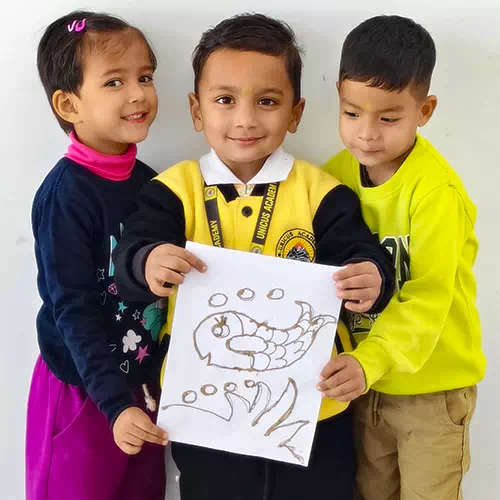
The Role of Primary Education in Child Development
Many believe school is simply for books, but the role of primary education in child development is far more extensive than that. It includes;
- Building a Social Compass: In the classroom, children learn they are part of a group. They learn to wait for their turn, to stand up for a friend, and to work through a problem. These are skills they will use in every job and every relationship for the rest of their lives.
- Creating a “Can-Do” Spirit: When a seven-year-old learns a new complex word, there is a sense of accomplishment attached to it. The child feels that he is capable. This early confidence is what gives them the courage to try harder subjects later on.
- Brain Patterns: This is when the brain is at its sponge-like stage. The patterns developed during this time will stay with the child for the rest of their life.
Also Read: Play School Kotdwar
Primary and Secondary Education: Understanding the Shift
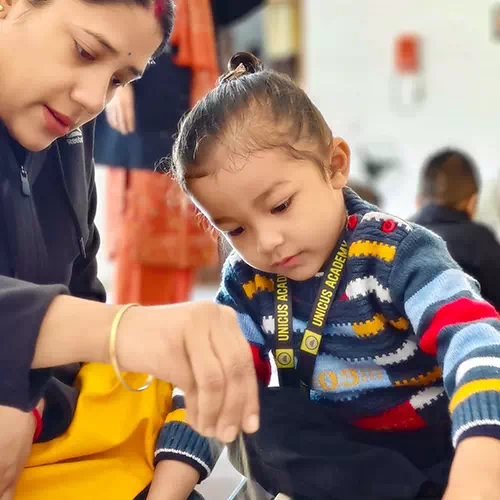
If we consider the learning process of a child, it is always beneficial to consider it as two separate but interrelated phases. Even though primary and secondary education are a part of a larger process, each one of them has a different role to play in your child’s upbringing. You can consider the primary years of a child as the phase of acquiring tools. It is the time when a child begins to acquire the fundamental keys of the world, such as reading, logic, and social skills. Secondary school is where they start using those tools to build something specific, like a career path or a deep interest in a particular area. If a child misses out on those early skills, the move to higher grades can feel like trying to run before they can walk. This is why the early years serve as the true anchor for everything that comes later.
| What are we looking at? | The Primary Years | The Secondary Years |
|---|---|---|
| The Big Picture | Giving your child the basic tools to understand the world | Helping your child find their own path and interests |
| Daily Focus | Mastering the alphabet, basic math, and how to speak up | Diving deep into biology, world history, and complex literature |
| Personal Growth | Learning how to be a good friend and share ideas | Figuring out who they are and what they want to do for a career |
| The End Result | A student who loves to ask questions and try new things | A graduate who is ready for college or their first job |
By ensuring that the transition between these two phases is smooth, we can ensure that the students feel capable rather than overwhelmed.
A Look at Primary Education in India
In our particular scenario, the primary education system in India has seen a huge overhaul. With the introduction of the National Education Policy, there is a renewed emphasis on foundational literacy and numeracy. The emphasis is not only on “schooling” (getting a child enrolled in school) but on “learning” (getting a child to understand the concepts).
The Indian education system lays emphasis on a mix of traditional values and modern scientific temper. The focus lies in shifting from rote learning to experiential learning. The parents of today want their children to be in a setting where they are encouraged to ask “why” and not just “what.”

Understanding the Primary Education Syllabus
Many parents feel a bit of worry when they look at a school syllabus for the first time. It can seem like a lot to take in, but a good curriculum is actually quite simple in its goal. It aims to give your child a balanced mix of skills. While every school might do things a little differently, most quality programs focus on a few key areas that help a child grow.
| Subject Area | What the Child Learns | Why It Matters |
|---|---|---|
| Language Arts | Reading, writing, and speaking clearly | It is the tool for all other learning |
| Mathematics | Patterns, counting, and logic | It builds the ability to solve problems |
| Environmental Studies | Observing nature and the community | It helps them respect the world they live in |
The way children learn these subjects is often compared to a spiral. Instead of teaching a topic once and moving on, the school introduces a basic idea and then returns to it later with more detail. This way, the child does not feel rushed and can build true mastery over time.
Why Quality Primary Education is an Investment, Not an Expense
When we talk about the significance of primary education, we are referring to the long-term implications. Research has shown that children who have access to quality primary education tend to:
- Have higher earning potential in adulthood.
- Demonstrate good mental health and resilience.
- Make a positive contribution to society.
It is during this period that the “habit of excellence” is developed. If a child can enjoy the process of discovery at the age of seven, they will be a lifelong learner at the age of seventy.
How Unicus Academy Supports This Journey
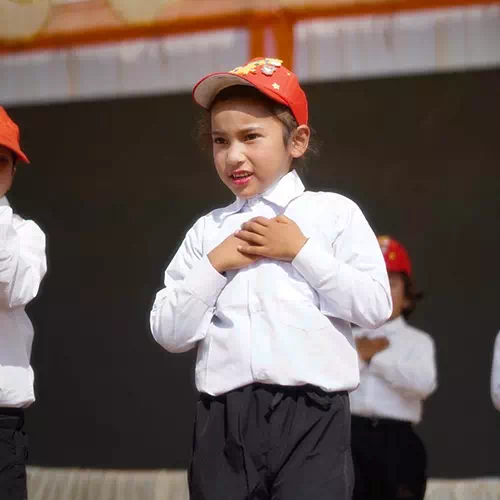
The choice of the right partner for these formative years is one that determines the future of a family. At Unicus Academy, we understand that every child is a world of their own and is full of possibilities. Our philosophy for primary education is more than just the curriculum. We are committed to manifest the curiosity that children are born with, ensuring that their first step into formal learning is filled with joy and wonder.
At Unicus Academy, we are of the firm belief that the curriculum for primary education should be a living and breathing entity that is able to adapt to the child as they are, but also has the ability to guide them to where they need to be. By creating a polite, guiding, and supportive environment, we are able to ensure that the role of primary education in the development of children is achieved for every child who walks into our school.
We would like to welcome you to the Unicus Academy family, where we do not just teach lessons, but lay the foundation for a bright and purposeful life.
FAQs
Most children begin their primary journey around age five or six, after completing their foundational years in preschool or kindergarten.
The best support is encouragement. Read with them daily, play logic-based games, and show a genuine interest in what they learned at school. Consistency at home reinforces the lessons learned in the classroom.
While there are national guidelines set by boards like CBSE or ICSE, individual schools often add their own unique teaching methodologies and extracurricular activities to enrich the learning experience.
It is called "formative" because this is the period when a child’s character, cognitive habits, and social patterns are literally being formed. Like wet clay, they are most receptive to shaping during this window.
We understand that children hit milestones at different times. Our educators are trained to provide personalized attention, ensuring that no child feels rushed and no child feels left behind.